
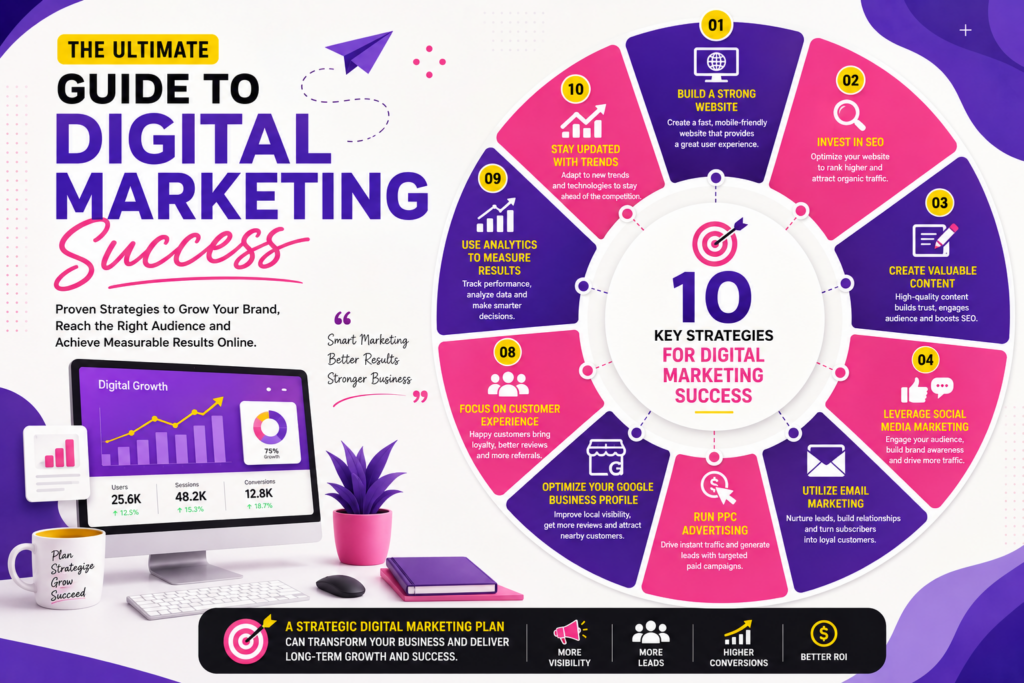
In today’s fast-paced digital world, businesses need more than just a website to succeed online. Consumers are constantly searching for products, services, and information across search engines, social media platforms, and online marketplaces. To stay competitive and attract potential customers, businesses must implement effective Digital Marketing strategies.
Digital marketing has transformed the way companies connect with their audience. It offers businesses the opportunity to increase brand awareness, generate leads, drive website traffic, and boost sales in a cost-effective manner. Whether you’re a startup, small business, or established company, mastering digital marketing is essential for long-term growth and success.
This ultimate guide will walk you through the key components of digital marketing and provide actionable strategies to help your business thrive online.
What Is Digital Marketing?
Digital Marketing refers to the promotion of products, services, or brands using online channels and digital technologies. It includes various strategies designed to connect businesses with their target audience where they spend most of their time—online.
Key Digital Marketing Channels:
- Search Engine Optimization (SEO)
- Social Media Marketing (SMM)
- Content Marketing
- Email Marketing
- Pay-Per-Click (PPC) Advertising
- Google Business Profile Optimization
- Website Marketing
- Video Marketing
When these channels work together, they create a powerful digital marketing ecosystem that drives measurable business results.
Why Digital Marketing Is Important
The modern customer journey begins online. Before making a purchase, most consumers research products, compare options, read reviews, and visit websites.
Benefits of Digital Marketing:
- Increases brand visibility.
- Generates targeted traffic.
- Builds customer trust.
- Improves customer engagement.
- Delivers measurable results.
- Offers cost-effective marketing solutions.
- Helps businesses compete with larger brands.
Digital marketing allows businesses to reach the right audience at the right time with the right message.
1. Build a Professional Website
Your website is the foundation of your digital marketing strategy. It serves as your online storefront and often creates the first impression of your business.
Essential Website Features:
- Mobile-friendly design.
- Fast loading speed.
- Easy navigation.
- Professional appearance.
- Clear calls-to-action (CTAs).
- Secure HTTPS connection.
- Contact information and inquiry forms.
Benefits:
- Builds credibility.
- Enhances user experience.
- Improves conversion rates.
A well-designed website can significantly impact customer trust and purchasing decisions.
2. Invest in Search Engine Optimization (SEO)
SEO helps your website rank higher in search engine results, making it easier for potential customers to find your business.
Key SEO Strategies:
- Keyword research.
- On-page optimization.
- Technical SEO improvements.
- Quality content creation.
- Link building.
- Local SEO optimization.
Benefits:
- Increased organic traffic.
- Higher search rankings.
- Better lead generation.
- Long-term online visibility.
SEO remains one of the most effective digital marketing investments for sustainable growth.
3. Create Valuable Content
Content is the fuel that powers digital marketing. High-quality content helps educate, engage, and convert potential customers.
Types of Content:
- Blog posts.
- Articles.
- Videos.
- Infographics.
- Case studies.
- Social media content.
- Email newsletters.
Content Marketing Benefits:
- Improves SEO rankings.
- Establishes authority.
- Builds customer trust.
- Drives website traffic.
Businesses that consistently publish valuable content often outperform competitors in search rankings and audience engagement.
4. Leverage Social Media Marketing
Social media platforms provide businesses with direct access to their target audience.
Popular Platforms:
- YouTube
- X (Twitter)
Effective Social Media Strategies:
- Post consistently.
- Share valuable content.
- Engage with followers.
- Use professional visuals.
- Run targeted advertising campaigns.
Benefits:
- Increased brand awareness.
- Improved customer engagement.
- More website traffic.
- Higher lead generation.
A strong social media presence helps businesses stay connected with customers and build lasting relationships.
5. Utilize Email Marketing
Email marketing remains one of the highest-return digital marketing channels available today.
Email Marketing Uses:
- Promotional campaigns.
- Product updates.
- Newsletters.
- Customer follow-ups.
- Lead nurturing.
Best Practices:
- Personalize emails.
- Create compelling subject lines.
- Segment your audience.
- Include strong calls-to-action.
Benefits:
- Increased customer retention.
- Higher conversion rates.
- Cost-effective communication.
- Improved customer loyalty.
Building and nurturing an email list can provide consistent business growth over time.
6. Run Pay-Per-Click (PPC) Advertising
PPC advertising allows businesses to reach potential customers immediately through paid search and social media ads.
Popular PPC Platforms:
- Google Ads
- Facebook Ads
- Instagram Ads
- LinkedIn Ads
- YouTube Ads
Benefits:
- Instant visibility.
- Highly targeted audience reach.
- Increased website traffic.
- Measurable results.
When managed effectively, PPC campaigns can generate significant returns on investment.
7. Optimize Your Google Business Profile
A Google Business Profile is essential for businesses targeting local customers.
Optimization Tips:
- Complete all profile information.
- Add high-quality photos.
- Collect customer reviews.
- Post updates regularly.
- Keep business details accurate.
Benefits:
- Better local search rankings.
- Increased customer trust.
- More website visits.
- Higher inquiry rates.
An optimized profile can significantly improve local visibility and customer engagement.
8. Focus on Customer Experience
Digital marketing success depends heavily on customer experience.
Improve Customer Experience By:
- Providing valuable information.
- Ensuring website usability.
- Offering quick customer support.
- Maintaining consistent branding.
- Creating personalized experiences.
Benefits:
- Increased customer satisfaction.
- Higher retention rates.
- More referrals and recommendations.
Satisfied customers often become your most effective brand advocates.
9. Use Analytics to Measure Performance
Successful digital marketing relies on data-driven decision-making.
Key Metrics to Monitor:
- Website traffic.
- Conversion rates.
- Social media engagement.
- Email open rates.
- Cost per lead.
- Return on investment (ROI).
Useful Tools:
- Google Analytics.
- Google Search Console.
- Social media insights.
- Email marketing reports.
Analyzing performance data helps identify opportunities for improvement and growth.
10. Stay Updated with Industry Trends
Digital marketing is constantly evolving. Search engine algorithms, social media platforms, and consumer behaviors change regularly.
Current Trends:
- Artificial Intelligence (AI)
- Voice Search Optimization
- Video Marketing
- Short-Form Content
- Influencer Marketing
- Personalization
Businesses that adapt to new trends often gain a competitive advantage.
Common Digital Marketing Mistakes to Avoid
Avoid these common mistakes that can limit your success:
❌ Ignoring SEO
❌ Inconsistent branding
❌ Poor-quality content
❌ Neglecting social media engagement
❌ Not tracking performance metrics
❌ Overlooking mobile optimization
❌ Incomplete Google Business Profile
❌ Lack of a clear marketing strategy
Avoiding these mistakes can save time, money, and lost business opportunities.
Creating a Winning Digital Marketing Strategy
A successful digital marketing strategy should include:
Step 1: Define Your Goals
Determine whether your focus is on:
- Brand awareness
- Lead generation
- Sales growth
- Customer retention
Step 2: Identify Your Target Audience
Understand:
- Demographics
- Interests
- Pain points
- Online behavior
Step 3: Select the Right Channels
Focus on platforms where your audience spends the most time.
Step 4: Create Valuable Content
Develop content that educates, entertains, and solves problems.
Step 5: Measure and Optimize
Continuously analyze performance and improve your strategy.
Conclusion
Digital Marketing is one of the most powerful tools available for business growth in today’s online world. By combining SEO, Content Marketing, Social Media Marketing, Email Marketing, PPC Advertising, and Google Business Profile Optimization, businesses can attract more customers, increase brand visibility, and achieve sustainable success.
The key to digital marketing success is consistency, strategic planning, and continuous improvement. Businesses that invest in building a strong online presence and delivering value to their audience will be better positioned to thrive in an increasingly competitive marketplace.
Start implementing these digital marketing strategies today and unlock the full potential of your business online. 🚀