
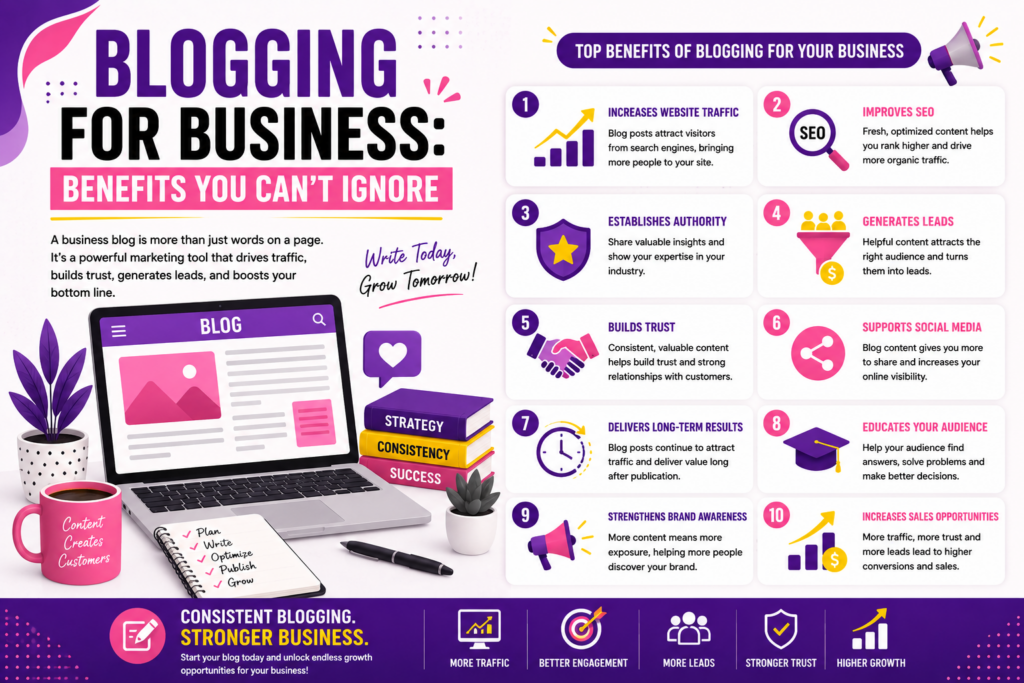
Blogging for Business: Benefits You Can’t Ignore
In today’s competitive digital landscape, businesses need effective ways to attract customers, build trust, and establish a strong online presence. While social media, paid advertising, and email marketing are important components of a digital marketing strategy, blogging remains one of the most powerful tools for long-term business growth.
A business blog is more than just a collection of articles. It serves as a platform to educate your audience, showcase your expertise, improve search engine visibility, and generate valuable leads. Companies that consistently publish high-quality blog content often experience increased website traffic, stronger customer relationships, and higher conversion rates.
If you’re wondering whether blogging is worth the effort, here are the benefits you simply can’t afford to ignore.
What Is Business Blogging?
Business blogging involves creating and publishing informative, relevant, and engaging content on your company website. These articles are designed to answer customer questions, provide solutions, share industry insights, and promote your products or services in a helpful way.
Unlike traditional advertising, blogging focuses on delivering value first, helping businesses build trust and credibility with potential customers.
Why Blogging Matters for Businesses
Consumers today research extensively before making purchasing decisions. They search for answers, compare options, and seek expert advice online.
A blog allows your business to become a trusted source of information while guiding potential customers through their buying journey.
Key Benefits:
- Improves online visibility
- Attracts targeted traffic
- Builds brand authority
- Generates leads
- Supports SEO efforts
- Strengthens customer relationships
- Increases sales opportunities
Businesses that blog consistently often gain a significant advantage over competitors who don’t.
1. Increases Website Traffic
One of the biggest advantages of blogging is its ability to drive consistent website traffic.
Every blog post creates a new opportunity for your website to appear in search engine results. The more valuable content you publish, the more chances potential customers have to discover your business.
How Blogging Drives Traffic:
- Targets specific keywords.
- Answers common customer questions.
- Attracts search engine visitors.
- Encourages social media sharing.
Benefits:
- More website visitors.
- Increased brand exposure.
- Better lead generation opportunities.
A steady flow of traffic can significantly contribute to business growth over time.
2. Improves Search Engine Optimization (SEO)
Blogging and SEO go hand in hand.
Search engines favor websites that regularly publish fresh, relevant, and informative content. Blogging allows businesses to target important keywords and improve their visibility in search results.
SEO Benefits of Blogging:
- More indexed pages.
- Better keyword rankings.
- Increased organic traffic.
- More internal linking opportunities.
- Improved website authority.
Regular blogging can help your website rank higher on Google and attract qualified visitors without relying solely on paid advertising.
3. Establishes Industry Authority
Customers are more likely to trust businesses that demonstrate expertise in their field.
A well-written blog allows you to share valuable knowledge, industry insights, and practical solutions that showcase your experience and professionalism.
Ways Blogging Builds Authority:
- Educates your audience.
- Shares expert advice.
- Demonstrates industry knowledge.
- Solves customer problems.
Benefits:
- Increased credibility.
- Greater customer confidence.
- Stronger brand reputation.
When customers view your business as an expert, they’re more likely to choose your services over competitors.
4. Generates High-Quality Leads
Blogging can be an effective lead-generation tool.
By creating content that addresses your audience’s needs, you attract visitors who are genuinely interested in your products or services.
Lead Generation Techniques:
- Include contact forms.
- Offer free consultations.
- Provide downloadable resources.
- Use strong calls-to-action (CTAs).
Benefits:
- Higher-quality leads.
- Better conversion rates.
- Increased sales opportunities.
A strategic blog can turn website visitors into loyal customers.
5. Builds Trust with Your Audience
Trust is one of the most important factors in any business relationship.
Blogging allows you to provide valuable information without immediately trying to sell something. This approach helps build credibility and creates stronger connections with your audience.
Benefits:
- Improves customer relationships.
- Increases brand loyalty.
- Encourages repeat business.
- Enhances customer confidence.
People prefer doing business with companies they trust.
6. Supports Social Media Marketing
Creating consistent social media content can be challenging. A business blog provides a continuous source of valuable content that can be shared across multiple platforms.
Benefits:
- More social media engagement.
- Increased content visibility.
- Additional website traffic.
- Stronger online presence.
Each blog post can generate multiple social media posts, extending its reach and impact.
7. Provides Long-Term Marketing Results
Unlike paid advertisements that stop generating results once the budget runs out, blog content can continue attracting visitors for months or even years.
Evergreen Content Examples:
- How-to guides.
- Industry tips.
- Frequently asked questions.
- Educational articles.
Benefits:
- Long-term traffic generation.
- Continuous lead opportunities.
- Better return on investment.
A single high-performing blog post can deliver value long after it’s published.
8. Helps Educate Customers
Many potential customers may not fully understand your products, services, or industry.
Blogging allows you to educate your audience and guide them through the decision-making process.
Content Ideas:
- Product guides.
- Service explanations.
- Industry trends.
- Customer success stories.
Benefits:
- Better-informed customers.
- Reduced objections.
- Faster purchasing decisions.
Educated customers are often more confident and easier to convert.
9. Strengthens Brand Awareness
Every blog post increases your brand’s visibility online.
As more people discover and share your content, your business gains greater exposure and recognition within your industry.
Benefits:
- Increased brand recognition.
- Wider audience reach.
- Improved market positioning.
Consistent blogging helps keep your business top-of-mind for potential customers.
10. Increases Sales Opportunities
Ultimately, blogging supports business growth by creating more opportunities to convert visitors into customers.
By attracting targeted traffic, building trust, and showcasing expertise, blogs help move potential customers closer to making a purchase.
Benefits:
- More qualified prospects.
- Higher conversion rates.
- Increased revenue potential.
A strong content strategy often contributes directly to business growth and profitability.
Best Blog Topics for Businesses
If you’re unsure what to write about, consider these popular business blog ideas:
Digital Marketing
- The Ultimate Guide to Digital Marketing Success
- Top SEO Strategies to Boost Website Traffic
- Why Social Media Marketing Matters
Local Business
- How to Optimize Your Google Business Profile
- Local SEO Tips for Small Businesses
- The Importance of Online Reviews
Website & Branding
- Why Every Business Needs a Professional Website
- How Branding Builds Customer Trust
- Essential Website Features for Success
Customer Education
- Frequently Asked Questions
- Industry Trends and Insights
- Beginner’s Guides
Choose topics that address your audience’s needs and challenges.
Common Blogging Mistakes to Avoid
Avoid these mistakes to maximize your blogging success:
❌ Publishing inconsistent content
❌ Ignoring SEO best practices
❌ Writing only promotional content
❌ Using poor-quality images
❌ Neglecting mobile readability
❌ Not including calls-to-action
❌ Failing to update older posts
A successful blog focuses on providing value while supporting business goals.
How Often Should You Blog?
Consistency is more important than frequency.
For most businesses:
- 1 Blog Per Week – Good for steady growth.
- 2-3 Blogs Per Week – Faster SEO and traffic growth.
- 4+ Blogs Per Week – Aggressive content marketing strategy.
The key is maintaining quality and consistency over time.
Conclusion
Blogging is one of the most valuable digital marketing tools available to businesses today. It helps increase website traffic, improve SEO rankings, build brand authority, generate qualified leads, and strengthen customer trust.
Unlike many marketing strategies that produce short-term results, blogging creates long-lasting value that continues to benefit your business over time. By consistently publishing informative and engaging content, businesses can attract new customers, nurture relationships, and establish themselves as industry leaders.
If your goal is to grow your online presence, increase customer engagement, and drive more sales, blogging is a strategy you simply can’t ignore. 🚀