
In today’s competitive digital landscape, simply having a website is not enough. If your target audience cannot find your website on search engines, you may be missing valuable opportunities to generate leads, sales, and brand awareness. This is where Search Engine Optimization (SEO) plays a crucial role.
SEO is the process of optimizing your website to improve its visibility on search engines like Google. A well-executed SEO strategy helps your website rank higher in search results, attract qualified visitors, and build long-term online success. Whether you are a small business owner, entrepreneur, or digital marketer, implementing the right SEO techniques can significantly increase your website traffic.
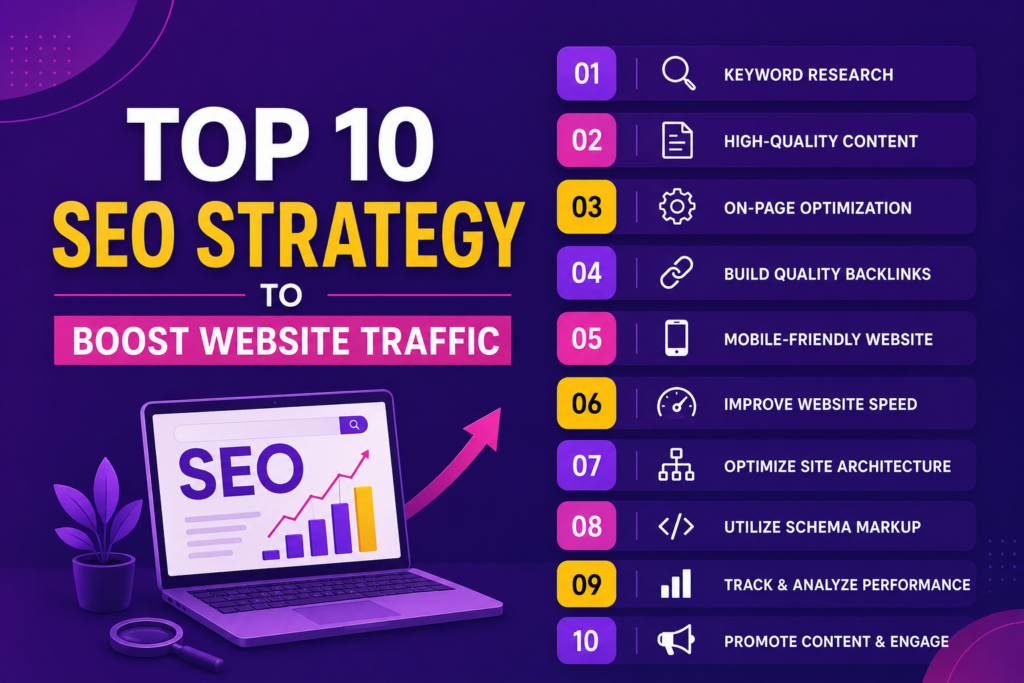
Here are the Top 10 SEO Strategies to Boost Website Traffic and help your business grow online.
1. Conduct Thorough Keyword Research
Keyword research is the foundation of every successful SEO campaign. Keywords are the terms and phrases people use when searching for information, products, or services online.
By identifying the right keywords, you can create content that matches user intent and improves your chances of ranking higher in search results.
Best Practices:
- Focus on high-volume and low-competition keywords.
- Use long-tail keywords that target specific searches.
- Analyze competitor keywords to identify opportunities.
- Include keywords naturally throughout your content.
Benefits:
- Higher search engine rankings.
- Increased targeted traffic.
- Better conversion rates.
2. Create High-Quality Content
Content remains one of the most important ranking factors in SEO. Search engines prioritize websites that provide valuable, relevant, and informative content to users.
Your content should solve problems, answer questions, and provide useful insights that keep visitors engaged.
Tips for Quality Content:
- Write original and informative articles.
- Focus on user needs and search intent.
- Update existing content regularly.
- Include statistics, examples, and actionable advice.
Benefits:
- Improved rankings.
- Increased website engagement.
- Higher authority in your industry.
3. Optimize On-Page SEO Elements
On-page SEO refers to optimizing individual pages to improve search engine visibility.
Key elements include:
- Title Tags
- Meta Descriptions
- Header Tags (H1, H2, H3)
- Image Alt Text
- URL Structure
- Internal Links
Best Practices:
- Include primary keywords in titles and headings.
- Write compelling meta descriptions.
- Use clear and descriptive URLs.
- Structure content for easy readability.
Benefits:
- Better search engine understanding.
- Higher click-through rates.
- Enhanced user experience.
4. Improve Website Loading Speed
Website speed directly impacts both user experience and SEO rankings. Visitors expect websites to load quickly, and slow-loading pages often lead to higher bounce rates.
Ways to Improve Speed:
- Compress images.
- Minimize unnecessary code.
- Use browser caching.
- Choose reliable web hosting.
- Enable content delivery networks (CDNs).
Benefits:
- Better user satisfaction.
- Lower bounce rates.
- Improved search rankings.
5. Make Your Website Mobile-Friendly
With the majority of internet users browsing on mobile devices, having a mobile-responsive website is essential.
Search engines prioritize mobile-friendly websites because they provide a better user experience.
Mobile Optimization Tips:
- Use responsive design.
- Optimize images for mobile viewing.
- Improve page loading speed.
- Ensure easy navigation on smaller screens.
Benefits:
- Increased mobile traffic.
- Better search engine rankings.
- Improved user engagement.
6. Build High-Quality Backlinks
Backlinks are links from other websites pointing to your website. They act as votes of confidence and signal to search engines that your content is trustworthy and valuable.
Effective Link Building Strategies:
- Create shareable content.
- Guest post on reputable websites.
- Build industry partnerships.
- Earn mentions from authoritative sources.
Benefits:
- Increased domain authority.
- Improved search rankings.
- More referral traffic.
7. Optimize for Local SEO
If you serve customers in a specific geographic area, Local SEO can help you attract nearby customers searching for your services.
Local SEO Techniques:
- Optimize your Google Business Profile.
- Use location-based keywords.
- Encourage customer reviews.
- Create local content.
- Ensure consistent business information across directories.
Benefits:
- More local visibility.
- Increased website visits.
- Higher conversion rates.
8. Focus on User Experience (UX)
Search engines aim to provide users with the best possible experience. Websites that are easy to navigate and provide valuable information tend to perform better in search rankings.
Improve User Experience By:
- Creating a clean website design.
- Using clear navigation menus.
- Improving readability.
- Reducing intrusive pop-ups.
- Providing helpful content.
Benefits:
- Longer session durations.
- Lower bounce rates.
- Better search rankings.
9. Use Internal Linking Effectively
Internal links connect one page of your website to another. They help users navigate your website and assist search engines in understanding your site structure.
Internal Linking Best Practices:
- Link to relevant pages naturally.
- Use descriptive anchor text.
- Connect related blog posts.
- Avoid excessive linking.
Benefits:
- Improved website navigation.
- Better content discovery.
- Increased page authority distribution.
10. Monitor and Improve SEO Performance
SEO is an ongoing process. Regularly monitoring your performance helps identify what’s working and where improvements are needed.
Key Metrics to Track:
- Organic traffic.
- Keyword rankings.
- Bounce rate.
- Conversion rates.
- Backlink growth.
Useful Tools:
- Google Analytics.
- Google Search Console.
- SEO auditing tools.
- Keyword tracking platforms.
Benefits:
- Better decision-making.
- Continuous traffic growth.
- Improved SEO results over time.
Conclusion
Successful SEO requires a combination of keyword research, high-quality content, on-page optimization, website speed improvements, mobile responsiveness, backlink building, local SEO, user experience enhancements, internal linking, and continuous performance monitoring.
By implementing these Top 10 SEO Strategies, businesses can improve their search engine rankings, attract more qualified visitors, and achieve sustainable online growth. While SEO takes time and consistent effort, the long-term benefits make it one of the most effective digital marketing investments available today.
Start applying these strategies to your website and build a stronger online presence that drives traffic, leads, and business success.